 A couple of weeks ago the San Diego Audubon Society sponsored their annual Birding Festival. It was a 4-day event. I was only able to go for 2 days to attend a couple of classes on digiscoping. The speakers were excellent and I learned a lot. I was disappointed though because I missed all of the birding field trips and keynote speaker, Pete Dunn. That was due to the events filling up fast. Those misses were very unfortunate and I'll be sure to make early reservations for the Birding Festival next year.
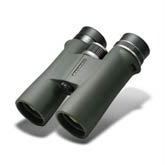
On Saturday there were lots of vendors and organizations providing information. With all the binoculars, scopes, etc. on display I discovered and confirmed what my next pair of binoculars will be. Selecting binoculars is a highly individual choice. Where I thought the real high-end equipment like Swarvoski, Zeiss, etc. would be just what I'd probably want, I discovered an Eagle Optics binocular that suited me just fine and is equal in visual quality to the more expensive designs. In fact, I like these binoculars better ... they are really perfect for me. My excitement over the decision to get them is in high-gear. Liking these binocs better than the real expensive ones surprised me because it always seems that to get what I really want means paying a higher price. So while my budget will be hit fairly hard at $879, it seems reasonable as compared to the mid-$1,500-plus range.
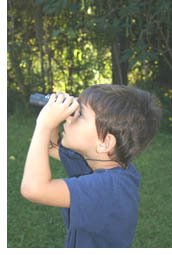
I'm still using my first pair of binocs ... Audubons. When I bought them they seemed adequate enough and for some things, they still are. I guess real die-hard birders would consider them priced on the low end of the scale. Like I said they still are ok ... but after looking through my new choice ... Stokes Birding Series DLS 8x42's ... with their much better optical quality I know I need these new ones!
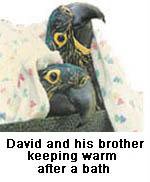
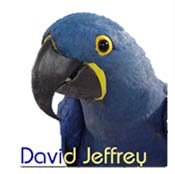
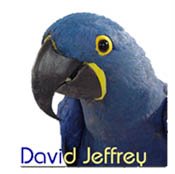
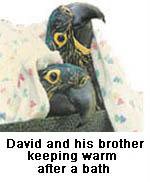 David Jeffrey, my Hyacinth Macaw got his middle name in an odd way. It all began because the lady who hand-fed David chose, what she considered to be, very sweet boy names for the two Hyacinth babies she was raising. It's easy to understand her desire because handfed Hyacinths are such incredibly sweet baby birds.
When I bought David I kept his name because I've always preferred naming most of my pets with human names. This is especially true for my parrots. Parrots have such human characteristics it seems almost insulting to give them some "cutsey" pet-type name. But that's just my personal feeling, of course. There are many parrots in the world with great names that aren't normally used for people.
David has a brother and they were raised together until being separated to go to their new homes. When I arrived to pick up David I discovered a house full of people there to celebrate David going to his new home. One of the guests was confused over which bird was David and which one was Jeffrey. So everytime she spoke to one of the Hyacinths' she would call him David-Jeffrey.
Then we discovered that Jeffrey's new "parents" wanted to change his name to something different. So the name Jeffrey was abandoned. That made the lady who raised Jeffrey kind of sad because she thought the name was so appropriate. Since the party-goer had used the name David-Jeffrey it stuck for me. So we officially added Jeffrey as David's middle name.
I have an African Grey with a middle name, too. But that's another story.
 This month I celebrated my first anniversary of making the decision to build a website about birds ... mostly about backyard birdwatching. Since I have a nice family of exotic birds I couldn't help but include a little about them, too. It's been quite a journey and is directly responsible for my having this blog. I began this Internet project knowing absolutely nothing about building a website or any of the satellite "stuff" it led to.
If not for a friend of mine in Canada I never would taken on such an endeavor. She gave me the encouragement. My thanks to her is sincerely given. Since my passion is birds it has been very satisfying to create Birdwatchin'.com. But I never could have even remotely considered doing so without a very affordable program used by thousands of people around the world. For anyone who has considered creating a website to promote an interest or earn an income I can highly recommend checking it out. It truly over-delivers. There are a lot of examples of what people have accomplished with this tool. If you want to see what a real Internet novice (and I do mean beginner) has been able to do using this program ... then take a look at Birdwatchin.com. I'm still find it incredible that I actually did it. It amazes me!
Anyway, the website has led to other activities such as this blog. And it is also the reason I'm launching a newsletter called David's Wild Bird News! The first issue is due to come out in the next few days. Who is David? ... actually, his full name is David Jeffrey (there's a reason for the double name ... I'll explain tomorrow). David is my Hyacinth Macaw. He "volunteered" to be the host of the newsletter. I'm just his assistant. Anyway, if you love bird watching check out Birdwatchin.com and subscribe to the newsletter ... it's free!
 I've been planning my backyard to encourage my wild bird visitors raise a family. I'm really looking forward to observing wild birds behavior as it pertains to rearing babies. I've had the amazing personal experience of raising four Umbrella Cockatoos some years ago. Raising those babies was a real eye-opener because I learned first hand what labor-intensive work it is to get a baby bird to the fledging point. And that's just the beginning of the needs of a young bird until it is ready to survive by itself. Knowing first-hand about the work it takes makes my desire to help the wild birds stronger because they also have the challenge of survival.
I don't remember any other experience that was as rewarding as watching my baby Umbrellas grow up. Only another person who has participated in such an event will really understand what I mean about reward. So with those memories well entrenched I've been trying to decide what kinds of bird house/nestboxes (how many and where) I should put up. While doing my research I came across a nesting platform made especially for hummingbirds. I didn't know such a thing existed. Anyway, when I saw it I knew I had to have it. Only one time in my life have I seen a nest of hummingbirds. There were 2 babies in the nest. They were so tiny -- frankly, I was transfixed as I stood there watching them. But the sad thing was ... a wind storm came the very next day and destroyed the nest. I could find nothing left. It broke my heart and I've never forgotten it.
So I'm thinking ... hmmm! perhaps this hummingbird nest platform will be just the ticket to accomplish two goals:
- The platform may provide a sturdy base for the hummingbird to build her nest and help prevent the kind of tragedy I encountered before.
- If I choose the place for mommy hummingbird to build her nest ... then I'll know where to find the baby hummingbirds. Being so small, hummingbird nests are hard to find ... but I'll know where to look.
The success of providing the nest will depend on where I put it. The hummingbird is going to have to like it's location ... that's for sure. So I'll do some more research about what type of environment and location is the best. Then this new adventure will begin.
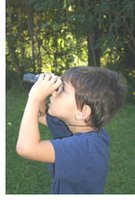 Got any little birders in your family that are budding and ready to bloom? Here's an idea to help them enjoy watching birds.
With spring just around the corner we're setting up bird house/nestboxes now so they'll be ready for the arrival of our avian visitors. It's pretty amazing to watch the progress of birds raising their families. It's even more enjoyable to watch little kids excitement over this kind of event. We want to rig a way to watch new bird babies on the inside of the nestbox. It's the ideal way to monitor their development and health ... not mention a terrific educational opportunity for kids. There's been a good amount of discussion around here about how to accomplish such a project easily. We've been making a list of equipment, accessories, etc. The project seemed somewhat daunting. Then I discovered that you can buy a nestbox all ready to record this amazing springtime event. Yippee! Check it out ... maybe offering such a nestbox would be perfect for your backyard.
Speaking of kids ... why not give them a fun project that will help the birds with their nesting activities. Here's an idea ... offer nesting material for the birds (see what's needed for the project below). No kids? Or maybe you just don't have the time for such a project. Then just get a kit all ready to offer. There are even nesting material replacements available for it, too.
Need some help choosing the right nestbox, this Birdwatchin.com guide will help you. Also check out the 10 most important features every nestbox should have.
Here's the Nesting Material Project:
Have the kids prepare a selection of materials from the following items (they've all been used by birds to build their nests). Then lightly pack the materials in a suet feeder and hang near your bird house. Use one or more of these material-filled feeders(*) depending the number of bird houses you are offering.
Yarn or string (cut the pieces about 4 to 6 inches)
Hair (human or animal hair -- horse hair is great)
Sheep's wool
Feathers
Shredded Paper
Dry Grass (use your clippings after mowing the lawn ... be sure they are chemical free)
Dead twigs and leaves
Straw
Plant fluff or down from Cottonwoods or Cattails
Cotton batting or other material used for stuffing
Moss
Bark Strips
Pine needles
Cloth (cut in stips 1/2" wide by 6" long)
(*) If you don't have a suet feeder to offer the nesting material just lay some of the natural items
on your plants and hedges, hang in trees, etc. It will help the birds, but won't be as much fun as watching the birds take the materials from a suet feeder that you've placed nearby.
Providing nesting opportunities for birds is the best way to celebrate the coming of spring.
 We took a drive to Lake Henshaw today for our first digiscoping experiment. After confirmation that Bald Eagles had an active nest there, I was eager to use my newly rigged-up digiscope to see if I could get a photograph of them.
Due to an appointment I couldn't get to the lake until about 12:30 p.m. knowing that I couldn't stay long. Upon arrival there was no eagle in view. So, we decided to wait to see if either the hen or her mate would make an appearance.
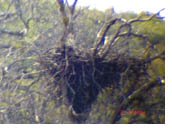
The nest is huge -- so big that when an adult eagle is incubating it is not visable from below. The tree were the nest is located is upslope from the road where we must park and view. It is also about 300 yards from where we could set up the digiscope. So it is impossible to see if an eagle is in the nest.
After about 40 minutes of waiting to see an eagle I felt compelled to pack up and try again another day as I needed to be home by 3:00 p.m.
Then two ravens came soaring overhead ... one had nesting material in it's beak. That intrigued me so I followed it with my binocs. Both birds put on an interesting aerial show and I was captivated. Then I saw the bird drop the nesting material and a few moments later land on the ground. It picked up something ... I couldn't see what it was. It flew towards the lake shore and landed and proceeded to eat whatever it had picked up. Some poor hapless creature, no doubt. After a few minutes the raven's activity attracted 5 turkey vultures looking for a meal to steal. Since I hadn't had any luck with the eagles I decided to photograph the drama on the ground. Unfortunately, my photographic attempt failed. With that disappointment I decided it was time to go home.
Just my luck ... with the scope removed from sighting the eagles nest I turned just in time to see one of the bald eagles return to the nest. Wouldn't you know it! I had a great opportunity to get a pretty exciting burst of photographs (or even a movie) ... if I'd just been a little more patient. My first lesson in learning to photograph wild birds ... be patient and make sure the camera is set for the most optimal shot. Okay, so now you know how much of a novice I really am.
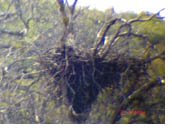
Although my first attempt met with failure, it was still an exciting hour of bird watching. You can be sure that I'll be back up at Lake Henshaw to try again. Oh, that eagles nest photo in the upper left corner is the one I photographed today ... sans the eagles., of course. Yep, I know it is pretty poor ... but didn't I just mention I'm a novice. So much to learn -- so little time!
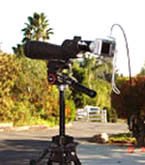 When I decided to create a website on bird watching I had no idea what other interests it would lead to. Then before I knew it a new word came to my attention ... digiscoping. I wondered what in the world digiscoping was? I soon discovered it meant taking photographs (in this case, of birds) with a digital camera shooting through a spotting scope. Wow! I thought what a great idea.
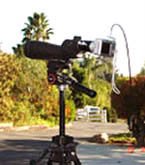
So I discussed the idea with my stepdad ... who is quite a guy. He is very handy and can do just about anything. He got intrigued with the idea and decided to help me learn how to take photographs this way. Well, he has taken the project really to heart. And found himself buying his second digital camera in just a few months, along with adapters, step-up and down rings, camera mounts, etc. All these accessories are necessary to adapt our current spotting scope to work like a digiscope. (Yep, there has been enough interest in digiscoping the last few years for the manufacturers to actually design photographic equipment called ... you got it ... a digiscope.) Then he got more inventive and rigged up a remote system that takes a photo without having to press the shutter button ourselves. This will eliminate camera-shake which is the quickest way to get a blurry photo.
We've gotten this far with our digiscoping experiment thanks to the opportunity to learn from the experts when we went to the San Diego Bird Festival a couple of weeks ago. That's where we found out about what type of digital camera works best and about the adapters we'd need. Thanks to the "experts" our digiscoping project is well underway. We finally located the step rings needed to connect the camera adapter to the spotting scope. So now we are ready to experiment.
We plan to photograph a Bald Eagle's nest at Lake Henshaw this weekend. Actually, we went to look for the nest a couple of weeks ago. We found it due to some easy directions offered by another birder. However, when we went to take a look the eagles were not apparent so we questioned whether the nest had been abandonded. Well, we just recently found out that the eagle was sighted in the nest. Her mate made an appearance, too. With this confirmation we've decided to try our luck getting our first digiscoped photo this weekend. I'll post the results next time.
Now I don't want to give you the wrong impression ... the idea for this project was mine, but all the ingenuity, labor and expense has been my stepdad's. Now you can really appreciate why I said he is "quite a guy".
 Wouldn't you know it ... just when I thought everything was just fine with this weblog ... I discovered it isn't. Thanks to a friend in Australia who was viewing a recent post with his Internet Explorer (IE) browser he alerted me to a problem. It seems when viewing this weblog in IE all the links on the right-side of the page are shown at the very bottom of the page, instead of the top. Now, that is NOT the way it is supposed to be. And the problem only seems to exist when viewing this weblog in the IE browser. The weblog page looks just fine using the Foxfire browser.
I wasn't aware of the problem because I rarely use IE anymore ... since a friend recommended Foxfire many months ago. So I'm certainly grateful to find out about my weblog IE problem, although a bit late. So I went to work trying fix things so IE users would have a "good" page to look at, too. Well, that led to the next frustration. I couldn't find a solution on my own. No problem, I thought, I'll just contact the program support department ... they'll help me fix things. Not to be. Their online Help didn't have information to solve my particular problem, so I wrote them. I received a standard computer-generated reply ... and it essentially said to go look in Help. Hmmmm! That led me back to where I'd come from.
Does this sound familiar to you? Computers and the Internet are so wonderful ... until something goes wrong and you are stuck for a solution. Then they are so frustrating.
In case this weblog is one that you'd like to revisit on occasion and you use IE ... my apologies. Until someone comes to save the day for me the only suggestion that I can offer is to view the posts with Foxfire. It's my browser of choice ... maybe you'll find it more to your liking, too.
Now, having made my explanation about the weblog error and becoming more frustrated as I think about the inability to solve it ... I'll stomp out to the deck to watch the birds. It is the best way to calm down.
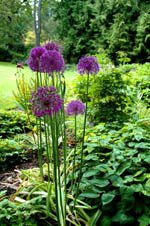 Here in Southern California -- the San Diego area to be exact -- we've enjoyed a very mild winter, so far. The weather has been mostly sunny and the temperature at the moment is 64 with the 70's predicted for next week. The only thing we need a lot more of is rain. Sitting at my window looking at the bright sun shining through the palm trees makes me contemplate spring. And thoughts of spring get my juices flowing for working in the yard ... replanting pots, trimming back hedges, pruning the numerous palm trees, as well as general maintenance. The two Hong Kong orchid trees will have to wait for their "haircut" until summer since winter is their season to bloom. For that reason summer can't come soon enough as these trees are looking shaggy.
Anyway, I'm giving thought to what might be added to my garden to make it more bird friendly, with the goal of attracting more species. Perhaps planting to attract insects will help some, too. These thoughts make me wonder if you like to birdscape. Do you garden for birds? If so, I'd sure be interested in learning about your experience. Here are a few questions in case you would like to leave your comments. Just click on the comment button below. Any other thoughts would be most welcome, too.
Why do you garden for birds?
What motivates you to spend all the time and energy it takes to develop and maintain a bird garden?
Do you design and plant to attract specific species? If so, what have you done?I'm very interested in learning about your experience. It will help me do the best for the birds visiting my yard. And I'm sure your comments would also be of interest to others visiting this weblog.
I've created a page on birdwatchin.com dedicated to bird gardening. As more time is available I'll be expanding the information there. So you may want to visit and allow me to share my thoughts and experience with you.
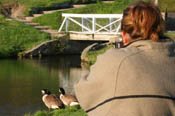 It is always fun to discover a new blog created about birds. It is a voyage of discovery which continually adds new information about how people enjoy the immensely satisfying hobby of bird watching and bird feeding. "My Favorite Blogs" is a new section I've added to share links to bird blogs. You'll find it over there in the right column. I imagine as time passes I'll discover blogs that may stray a bit from birds ... however, the main purpose for adding this new section is to share links to blogs that focus on birds. Two long term favorites are The Night of the Kingfisher and I and the Bird.
Just recently I've received comments from two new visitors to my blog. Contacts such as these are most welcome because I enjoy meeting new friends and learning the ways in which they enjoy their bird hobby. These new friends have great blogs which I'm sure you will enjoy. The photographs are incredible and the weblog discussions are just wonderful. I'm happy to add them to my list of favorite blog links. Look for Local Birds from Melbourne Australia authored by John Archer, and Easy Bird Watching Basics authored by John Lynn from Singapore. John Lynn's blog is reached by clicking the link which opens his website ... then search the nav bar for his blog.
Seeing the wonderful photos on these blogs has generated a lot of enthusiasm for learning more about my digital camera so I can take some great photos of my own.

 A couple of weeks ago the San Diego Audubon Society sponsored their annual Birding Festival. It was a 4-day event. I was only able to go for 2 days to attend a couple of classes on digiscoping. The speakers were excellent and I learned a lot. I was disappointed though because I missed all of the birding field trips and keynote speaker, Pete Dunn. That was due to the events filling up fast. Those misses were very unfortunate and I'll be sure to make early reservations for the Birding Festival next year.