I've been in a 22 year love affair. Yep, I sure have. Who has captured my heart? Well, I'll give you a hint . . . he is wrapped in a bundle of the most beautiful feathers anyone can imagine. These feathers are soft, fluffy at times, and absolutely take your breath away. Are you familiar with the rose bush named "Peace". If you are then you know the color tones of my beautiful friend. If you don't, take a look at the photo. It's my beloved Fagan, a Moluccan Cockatoo posing with the "Peace" rose in my backyard.
I couldn't resist putting the two of them together and taking the picture to share. Although I have to admit my photographic abililty is not improving much because Fagan's beautiful peach-colored feathers look a bit washed out. What you see is the best I could do.
Fagan and I have been together since he was most likely 6-8 months old. Why the estimated age? Because he was captured in the wilds of Indonesia as a baby bird. The only thing about our relationship that saddens me is that he couldn't fulfill his destiny as he was intended. Back in the mid-80's the U.S. still allowed importation of wild caught birds. I was a novice and didn't realize the horrors the wild bird trade committed. So I happily supported the trade when I saw this absolutely gorgeous, sweet baby bird in my local bird store. It was love at first sight. It was later that I came to regret my participation in furthering the business of trapping of wild birds by purchasing him. But other than that, I have no regrets . . . not for myself, at least.
Living with Fagan has been wonderful. Getting to know him has been a fascinating adventure. But it hasn't been without challenges, frustrations and hard work. But even with that I'm so grateful to have had the experience and lessons he has taught me. I wish I could repay him somehow. But I can't -- I can't provide the natural life he should have had. All I can do is make the best life possible for him. Since he has thrived over the years, I suppose I've succeeded somewhat. He knows no other life and is content. He has someone who loves him and an Umbrella Cockatoo buddy. Owing to the fact that he is incredibly intelligent and extremely adaptable creature I think I can honestly say he is happy. For that I am very grateful.
One day last week I was in my backyard working madly away in a flower bed. It was in need of some general cleanup and removing dead growth left patches of bare ground. In the process of clearing away the vegetation I noticed a couple of caterpillars. Being the nature lover I am, I replaced them in the vegetation and went on with my work. After a time, our frequently visiting Western Scrub Jay appeared in the birch tree above me. She (at least I think it's a she) sat above me and seemed to be watching me work. Shortly, I discovered it wasn't me that she was interested in, but rather she'd spied one of the caterpillars who had crawled back out of the flowers. The jay patiently waited until I was ready to haul away the debris I'd accumulated. As soon as I was about 15 feet away the Jay swooped down and picked up the caterpillar. So much for my trying to "protect" the caterpillar!
Now here's the thing I'm confused about. The Jay didn't eat the caterpillar, but instead flew off with it. Now, that is certainly their habit with peanuts. They hide peanuts for later eating. But you can't cache a caterpillar so I assumed the Jay would have eaten the insect after catching it. But no, she definitely was taking it somewhere.
So, being springtime, I assume that her purpose of flying off with the caterpillar was to bring "baby food" to her nest. Seems reasonable. But then I wondered if this might be an immature Jay with the caching instinct even for bugs. I guess I really have to cast my vote for the "baby food" theory.
This Jay has done another interesting thing. It has developed a taste for the grape jelly we offer the orioles. Up until recently the Jay has come to the feeder and eaten the jelly. Now recently, I've witnessed her flying off with gobs of jelly in her beak. Is the caching instinct at work again? Or, is she taking grape jelly to feed young ones? Yikes, I hope not ... that doesn't sound like a good diet for growing nestlings. There is a little more protein in a caterpillar than grape jelly! Maybe I'd better go back out to the garden and dig around some more.
 One of the great joys in my life are my Lesser Jardine Parrots. They are the smallest parrots I have and occupy a place in my heart that none of my other avian kids can fill.
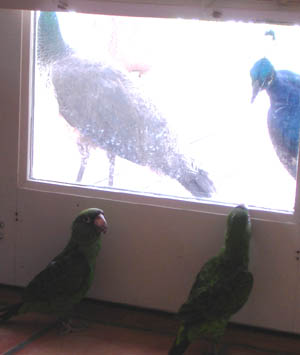
Jardines are known as the "African Amazon" alluding to the fact that they are very Amazon-like in personality and a little bit in appearance. Lesser Jardines are smallish-size parrots ... about 11 inches long. My Jardines are clowns. They have a funny little lilt to their walk, love to bounce around, roll on their backs, hang by one foot. Perhaps you're getting a visual picture. Adding "cute as a bug" will sum them up to a tee. They are also my best talkers . . . really they are quite gifted. They are also beautiful -- their feathers are the most amazing green color combined with black, with some of the green feathers being quite irridescent. As they get older red feathers appear usually on the head, edges of wings and also underneath the wings. The posed photo of Harry and Isabel depicts their color as well as a photo can. However, their colors are really more vibrant.  This photo shows two Jardine babies attracted to the window inspecting our visiting peacocks, which were just as curious about them. When I discovered this encounter I didn't have my camera close by, so missed the cutest photo-op. The Jardines were busy jumping up and down trying to get a better look. The peacock was showing just as much interest, but without the body language. Of course, I ran to get my camera and by the time I got back the peacocks had left the window. I waited for them to return while sitting scrunched up in the corner. It took long enough for my back to start hurting. As soon as they returned I tried to get a photo and all I managed to do was to startle the Jardines, who then turned into little statues when the flash went off. Oh, the trials bird photographers must go through. I hung in there as long as I could and finally got this shot, which is poor at best. Trying to deal with inside lighting vs. outside lighting is well beyond my capability. I had to lighten the photo enough to see the Jardines and the photo color ended up being washed out. Oh well, perhaps with more experience I'll learn how to deal with photographic challenges like this. I'll also need to take more photos of the Jardines so they get accustomed to the flash going off.
 As I've mentioned before, we have several peacocks in our neighborhood. They are free to roam about and often spend time at our home. The dominant male loves to see his reflection in the hubcab of my SUV.
Looking out a window this morning I saw him admiring himself and I tried to get a photograph. My only problem is this guy is a little people-shy. I'm not sure why he is so nervous . . . more so than his extended family members who often nap on our deck.
It's nearly impossible to sneak up close enough to him to get a good photo. I missed him as he admired himself in the hubcap mirror. And I just barely missed capturing this photo as he headed for cover. The palm frond obscured his head a little, but I managed to get this mediocre shot of his beautiful tail. Perhaps the next time he visits I'll have better luck.
 While out on my bird walk last Tuesday morning I was overwhelmed by all the singing and carrying on by the birds as I walked down the road. It was definitely a sign that spring has arrived. The male birds were in great form singing, each trying their best to attract a partner for the season. The music was wonderful, but I wasn't able to identify which birds were making what sounds unless I was able to see the bird.
If there is ever a time of year to know how to identify bird songs it is at the height of breeding season. So our local Nature Center sponsored a class on Birding By Ear in San Diego County. I decided to attend the class and see what birding by ear is all about.
I dragged myself out of bed very early after getting to bed at 1:30 a.m. Whew! Being very tired is not the way to begin the day, especially when you are going to sit in a darkened room watching slides and listening to the songs and calls of over 135 birds. I had to struggle some to stay alert, but I managed to get the gist of it. But the bottom line is the skill in identifying birds comes with a boat load of practice and then some more practice.
But you need to know how to put that "practice" to work. Here is an overview.
Repetition (that's the practice I mentioned . . . the need to listen to the bird song repeatedly until it begins to remain in your memory.)
Then there's What To Listen For
- Pitch ( is the bird song low, high, somewhere in-between, ascending, descending, or both)
- Timbre or tone quality (clear, harsh, buzzy, nasal)
- Rhythm (single note, accelerating, repetitive, rambling, unique rhythm)
How to Remember
- Describe in your own words
- Picture
- Make a musical notation (I guess this would be for music majors . . . that isn't me!)
- Pneumonic (i.e. a Yellow Warbler's pneumonic is "sweet, sweet, sweeter than sweet")
- Compare to similar sounding birds
Things To Be Aware Of
- Mimicry talents of some species (Mockingbirds/Thrashers, Starlings, Lesser Goldfinches, Steller's Jay)
- Distance/ambient noise
- Habitat
Field Experience
- Listening to the songs and calls of birds in the field is a must-do. And you have to do a lot of it.
The second half of our class will be held next Saturday when we go into the field for first-hand experience. So you can be sure I'll be doing my homework.
We received a CD of recorded bird calls at the class. The CD was created by Frank T. Awbrey, Professor Emeritus, San Diego State University. Sadly Prof. Awbrey passed away in 1998. He was actively pursuing research in bioacoustics (studying the sounds made by animals) until shortly before his death. It is a privilege to receive this tribute in honor of some of his work and I know it will help me on my quest to identify birds by their songs and calls.
It's great to have Prof. Awbrey's CD and it will help me get started. But there are also a number of other recordings and tools available to help learn bird songs. Some that our instructor suggested are the Birding By Ear CD's, among many other choices. As far as tools go, the Identiflyer is available to help identify birds with their songs while in the field. Also, along that line is a new tools offered by BirdPod consisting of programs that can be loaded into an IPod.
Looks like my "I-want" list will continue to grow. As I continue on my quest to identify birds I'm discovering I like all the gadgets and technology. They are cool and really help. My interest in birds over the past 21 years has directed me down an interesting path -- at the very least it has been one filled with self-growth. Well, I guess getting a little wiser with age has helped, too. Yep, that could be. And if that's it, then getting older really isn't so bad.
I remain frustrated with my inability to go to Lake Henshaw for a personal look at the Bald Eagle chick. The last update I mentioned about the progress at the nest was on March 25th. You'd think between then and now I could find the time to drive to the lake. But, nope . . . it hasn't been in the cards for me. The reason? My stepdad, who is the guy that is helping me set up a digiscope to photograph the nest activity found himself unexpectedly in the hospital. That visit led to open heart surgery on March 10th. Needless to say, his needs have been at the top of my agenda . . . especially since he came home on April 1st. Hospital visits and nursing care have take up much of my time. Besides I couldn't go up to visit the nest without him, and he isn't quite ready to travel. But I expect that he'll be able to go along with me in the next week or so.
In the meantime, I receive emails about observations of the nest that other birders have had. But I kind of dropped the ball, since the last report I read was back on April 9th. So better late than never -- here is that observation:
" . . . watched the Bald Eagle chick at Lake Henshaw being fed a large fish (at least 16 inches long) this a.m. The adult fed the young and removed the fish carcass within 3/4 hr. It then brought grass into the nest."
I hope by the time I'm able to view the nest I'll see something at least as interesting. If good fortune smiles on me maybe I'll return with a photo or two to share.
 I've been giving my new birding binoculars a workout. I've been going on the field trips associated with my birding class every weekend. And I've returned to my morning walks for exercise. But now those walks are all about sighting and identifying birds. What fun! While I have to admit that constantly interrupting power-walking to see a bird isn't the best way to get a cardio-vascular workout, I am walking farther and climbing higher hills. I hope that makes up for the frequent stops.
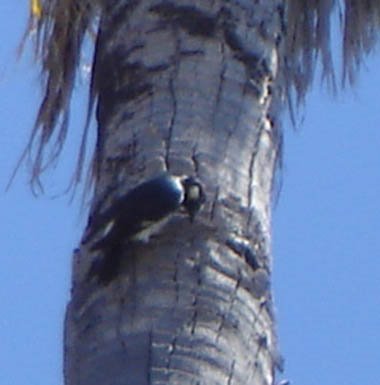
I'm also taking my digital camera along on my morning walks. I've been wanting to photograph birds for sometime now. It's good to have a photo (even if it is poor) to help remember the bird I want to identify. My goal is to become a good photographer. As you can see from the photos I took today, I have a long way to go. The photos, by the way, are of Acorn Woodpeckers (Melanerpes formicivorus) in case you can't tell. I was so excited when I saw these birds for several reasons. First, they are striking to look at . . . sorry my photos don't show how beautiful they are. And yes, they do have red "caps" on their heads. And their behavior is just as appealing as their bright little black and white suits. As you can see the single bird in the photograph (above) was in the company of two others (left). Time slipped by quickly as I watched these gregarious, social birds.
We have oak trees in our neighborhood and it seems reasonable to assume that the "nut" I saw one of them trying to store in a hole was actually an acorn. It was interesting to watch the bird try to find the right hole in the palm tree to fit the acorn. That is another aspect of their behavior ... storing food. I've seen photos of oak trees absolutely studded with stored acorns. I never thought I'd witness this behavior myself.
I love learning facts about birds. To this end, I've decided when I have an especially good sighting or see a new bird that I'll spend some time to learn something about them. It is part of the fun of bird watching. So far, here is what I've learned about Acorn Woodpeckers:
The size of Acorn Woodpeckers is 9 inches overall with a wingspan of 17.5" and they weigh about 2.8 oz. They are very vocal and were constantly chattering and calling to each other while I watched them. The sound they make is quite distinct and pretty much unforgettable. It will most likely be one of the first bird sounds that I'll be able to identify when I go to my Birding By Ear class tomorrow morning.
Besides being cavity nesters, they store food. All the food storage that goes on is to build a cache of food to carry them through the winter. These woodpeckers have an investment to protect so are very territorial and vigoroulsy defend their "grainery". This defense is not only against other Acorn Woodpeckers, but also against squirrels and jays. To store the food an Acorn Woodpecker will excavate a hole in the tree or telephone pole to hold the acorn. It takes from 30 to 60 minutes of drilling time to make the hole. That's pretty awesome and almost unbelievable when up to 11,000 holes have been found in a tree. No wonder they have a strongly ingrained defense mechanism. They have a lot of time and energy invested storing the food they must have to survive. Acorn Woodpeckers will also defend trees that are riddled with empty holes.
Then there is polyandry. What is that? Well, it is where females pair with several males. The males then incubate the eggs and care for the young. The females defend territories, compete for mates and take the lead in courtship. There are two types of polyandry -- classic and cooperative. Classic is where the female divides her attention among two or more mates. Cooperative polyandry is where several males cooperate to assist a female. Acorn Woodpeckers fall into the 'cooperative' group.
One other aspect of Acorn Woodpeckers is also fascinating . . . they form family groups. There are several factors which lead to this type of cooperative social unit. First, there may be a shortage of quality territories which discourages dispersal of the young woodpeckers. Or there may be a food shortage during dry years which leads to recruitment to help feed the young. More recent theories suggest that along with habitat saturation there may be social benefits, such as improved survivorship and the learning of skills which creates an extended period of apprenticeship.
I've learned just enough about Acorn Woodpeckers to whet my appetite find out more. Guess I'll have to add a book to my "I-want" list that provides more information on Acorn Woodpeckers.
 Be forewarned . . . I just realized that this blog entry has become a billboard. But for good reason that you'll appreciate, especially if you are in the market for new quality binoculars.
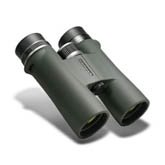
Back in February I discovered the binoculars I hoped to own one day. I found them at the Eagle Optics display at the San Diego Bird Festival. I'd been dreaming about getting a really fine pair of binoculars but knew they would cost in the neighborhood of $1,500 or maybe even higher. Prior to attending the Bird Festival I'd shopped a little in my local area. I casually looked at a pair or two of the high-end optics and then immediately lowered my sights to a more affordable price. Not that they wouldn't have been nice to have ... they were just too expensive. Although I found a pair of lower-priced binoculars that would have worked, they weren't much different than what I'd been using. My dream was to improve on that -- although I don't have much to complain about with my old standbys.
Anyway, at the Bird Festival all the great optics were there to compare. And compare, I did. I discovered what really good optics are all about and the clarity and brightness that comes with superior glass and coatings. The advice of "don't sneak a peak through someone's top-of-the-line optics if you intend to be satisfied with your moderately-priced ones" was good . . . but a little late for me 'cause I'd already looked.
I found some $1,600 binoculars that were impressive, to say the least. If not in quality, for sure in dollars. Just kidding ... the quality was superb. Then I did a reality-check. Should I spend so much money ... no, I shouldn't. So I kept wandering around the optics display area and finally got to Eagle Optics. This company represents many (probably all) manufacturers and they've been in business since 1986. It is a company that knows what it's doing -- and they have a great reputation. So I decided to do some comparisons at their booth. And what did I find ... an absolutely great pair of binoculars that gave me the same quality I'd seen in the most expensive glasses I'd just been looking at. But they cost about $700 less! Whew! After taking these binoculars outside to view an Osprey nest at the top of a condemned boat, it didn't take me long to decide these were my dream binoculars. But the price was still on the high side so I needed to think about it. Fortunately, Eagle Optics does most of its business online. So no rush, I could order them when I was ready.
Well, the unexpected happened and I found myself making the decision to buy the binoculars sooner than I'd dreamed. It was a dreary, rainy day when they arrived this week. Wouldn't you know it. But I didn't let the rain stop me -- I set the diopter and took them outside. I wasn't testing their water-proofness (although I could have), but rather I just wanted to see how bright the image was. Now picture this . . . it was dark and gloomy with a very light drizzle at the time. I focused on our backyard birch trees and I could see the raindrops hanging from the branches. But here is the thing -- the raindrops were so bright they glistened like little stars and the whole scene was crisp and beautiful. I couldn't believe the image could be so bright when the sky was so dark. I wish I had taken a picture of it through the binoculars. I guess I could have done that ... like a mini-disigscope. What kind of binoculars did I get? I thought you'd never ask. Here are all the details in case your curiosity is getting the better of you.
Manufacturer - Vortex
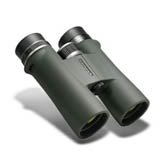
Name - Stokes DLS 8 x 42 (10x42 also available). Yep, the Stokes couldn't wait to put their name on these babies. Evidently, they are also their binoculars of choice for their own birding.
Field of View - 383 feet at 1,000 yards
Eye Relief - 18 mm
Close Focus - 4 feet 5 inches. Can you believe it? I can lay in my hammock and have a front row seat watching the hummingbirds at the feeder just above my head. This close focus is also superb for butterfly watching.
Dimenions (HxW) 5.5 x 4.875 inches
Weatherproofing - Waterproof/Nitrogen Purged
Vortex VIP Warranty - If my binoculars should ever require service, no matter what the case, Votex will repair or replace the binoculars absolutely FREE. The warranty is even transferable, but it doesn't cover theft, loss or deliberate damage. But that's only fair. It's a great warranty but one that will never by transferred by me. I'm not letting go of these binocs.
Eagle Optics 30-day Guarantee - I have the right to return the binoculars to Eagle Optics within 30 days if I'm not satisfied, less return shipping charges No chance of that! ... but nice to know.
At the risk of sounding like an Eagle Optics employee, here's more: These binoculars have 64-layer premium mirror-coated BaK-4 deviation prisms with the latest generation of phase corrected prism coatings.
The Total Optical Performance System gives you:
Pure silver coated, phase-corrected prisms for the highest image contrast and resolution.Precisely engineered and enhanced optical tube design to eliminate annoying glare and image ghosting. (Roof prism design . . . pictured above)
High-density prism glass and lens elements for exceptional image brightness and sharpness. That sure is the truth!
Twilight optimized multi-layered lens element coatings for optimal low light performance. Guess this why my raindrop image was so bright and clear. Highly polished and precision shaped lens elements and prisms for true flat field performance and minimal spherical distortion.
XHR (eXtremely High Resolution) fully multi-layered coatings to deliver excellence in resolution and color fidelity. No doubt about that.
Precisely designed optical system for particularly clear and precise focusing from extremely close range to infinity.
Smooth focus with just the touch of a finger -- fast enough to stay with warblers hopping as close as 4.5 feet, or swallows flying erratically out to infinity.
Optimum near-to-far focus travel reacts swiftly in 1.25 revolutions.
Soft, contoured eyecups can be locked in place when fully extended.
Multiple eye relief settings are accessed by twisting down the eyecups for wide, unobstructed views with eyeglasses.
Superb depth of field let you find and follow wildlife more easily.
Click-stop diopter control is conveniently located adjacent to the right eyepiece for precise adjustments for differences in your eyes.
Okay, okay so I got carried away with all the details. Forgive me. I couldn't help myself -- I'm so excited about these binoculars. In fact, before buying them I decided to do some research to figure out what all the techno-speak stuff was about. I learned enough to really appreciate what these DLS Binoculars offer. Now that I understand what it takes to have a good pair of birding binoculars I put together an easy primer so anyone can understand the basics. This is a primer that beginning birders might find especially useful. The primer will be available soon at Birding Binoculars so check back if you're interested.
The bottom line is that choosinbg binoculars is a very personal decision. With so many binoculars and manufacturers to choose from I'm grateful to have found the perfect ones for me. My suggestion is if you're in the market for quality binoculars check them out -- they may be the absolute end-all, perfect ones for you, too.
I never realized the impact blogging would have on me. I never realized I'd have so much fun writing about the going-ons in my life. I suppose that's because I've always been kind of a private person. But what do you know ... here I am writing about my life almost daily. And surprise of surprises ... I enjoy it. Who would have thought.
But the best part of blogging is the people I've met. It's been amazing. I have new friends in Australia, Singapore and most recently Costa Rica. And those exotic places don't lessen the impact of those I've met here in the U.S. And then there are the blogs these people and others write. There is a growing list of My Favorite Blogs over on there on the right. There are certainly many talented folks out there in cyberland and they bring insight and humor to my life daily. Computers are wonderful inventions.
My newest acquaintance from Costa Rica authors A Broad In Costa Rica . . . the play on words in the title is just an inkling of humor you'll discover as she writes about her family's adventures as new residents in Costa Rica. Don't miss it.
I also discovered a service on her blog offered by FeedBlitz that allows people to subscribe. What this means is that you'll get an email when there is a new post. Of course, XML syndication is available, too ... as it is on my blog (just over there to the right). But people seem to get confused over how that works and it's said that about 80% of potential subscribers avoid XML because they just don't understand it. Now I really don't know if anyone feels the need or desire to subscribe to my blog, but I thought I'd offer a subscription opportunity, too. Afterall, it's nice to think that I might contribute something about my interest in birds that others might find worth revisiting. So in case that's true and you'd like to get an email notice of new postings then just add your name to the subscribe block (over in the right column) and press Subscribe Me. Your information will be as confidential as you choose it to be. And be assured this is not something that will generate spam or any privacy issues.
I found a good way to make new friends is to leave comments on blogs . . . or on websites. So if you have a comment, something to share, or maybe a request just let me know. I'll do my best to respond.
Today is going to be full of non-birding activities until tonight. Then I get to go the second meeting of the Beginning Birding Class I wrote about yesterday. I'm ready and enthusiastically looking forward to what the next birding pro will share. Besides the birds themselves, it's the people you meet in the birding world that can be just as fascinating. More on the birding class tomorrow.
 When I received an email promoting a beginning birding class sponsored by the Buena Vista Audubon Nature Center I just couldn't resist signing up. Although I've been birding for awhile I was curious to see what an official birding class had to offer. Besides the BV Nature Center is close enough that I can get my nighttime pet bird chores done and still make it on time. So last Wednesday off I went.
First of all, the Nature Center is a pretty cool place. It is set adjacent to Buena Vista Lagoon in Oceanside (northern San Diego County). The Center is primarily devoted to educating children and they do a great job.
There are many bird specimens which really help to appreciate and remember the field marks of those species. Fortunately, the Nature Center has a volunteer who does taxidermy and she offers her services for free. I was very happy to hear that all the specimens were found in a deceased condition within Buena Vista Lagoon. I'm a real bleeding heart and I don't think I could bear hearing that the birds were captured for taxidermy purposes. I'm afraid if that were the case my experience at Buena Vista would have been ruined. I can't help it ... I just don't deal well with animal death. I know I need to be realistic and I am to a point. But the bottom line is I am a real bleeding heart and I struggle dealing with it.
Anyway, the first class was informal because it was combined with a general meeting of the BV Audubon Society. There was a guest speaker from another Nature Center in the San Diego area. She was a very experienced birder who has been birding for about 35 years. While her talk was informal it was interesting and focused on the mystery and magic of birds. A slide presentation of field marks accompanied her talk.
Then last Saturday we had a field trip to the Lagoon area of the Nature Center -- Buena Vista Lagoon, to be exact. The field trip included an informal talk on "Introduction to Birding" focusing on the birds of fresh water wetlands. The field trip began at 8:30 a.m. That meant rushing around to get morning bird chores done before I could leave. I was organized and out the door in time to get to the field trip on time, but in my rush forgot my binoculars. Did I say I was organized? Evidently, not well enough. Sheesh! I thought only I could pull a stunt like that, but found out later that people who've been birding forever have been known to do the same thing. But I really felt foolish and had to rely on the trip leader's scope to see my birds.
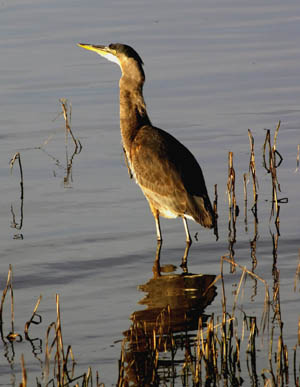
Here is the list of what I saw: Pied-billed Grebe, Western Grebe, White Pelican, Great Blue Heron, Mallard, Cinnamon Teal, Northern Shoveler, Gadwall, Ruddy Duck, Osprey, Red-tailed Hawk, Common Moorhen, American Coot, Black-necked Stilt, Ring-billed Gull, Anna's Hummingbird, Cliff Swallow (and their nests under a bridge), American Crow and Marsh Wren. Not bad for standing in one spot for a couple of hours. We'll have four more class meetings along with field trips. Each field trip will be to a habitat that provides an opportunity to use skills and see the types of birds covered in the previous class meeting. The last field trip will be to participate in the Buena Vista Audubon Society's Birdathon--America's Birdiest City Contest. The Beginning Birder's Class will form a team to participate in this event to test their new skills. Should be fun and a great way to finish the class.
Then on April 15th I'm going to attend a Birding By Ear class also sponsored by BVAS. I'm really looking forward to it because identifying birds by their song will be new to me. I just haven't put much effort toward learning those skills. More on that later.
I should have my new binoculars for the next field trip. I can't wait to get them ... they will be my first real high quality optics. I'm getting an Eagle Optics Bino System Harness strap, too. With that gadget I can hang my binocs around my neck in comfort and without them swinging around. They tell me that these straps are the way to go. So I'll hang my new binocs around my neck before I leave the house. I don't think I could deal with forgetting them twice.

 I've been in a 22 year love affair. Yep, I sure have. Who has captured my heart? Well, I'll give you a hint . . . he is wrapped in a bundle of the most beautiful feathers anyone can imagine. These feathers are soft, fluffy at times, and absolutely take your breath away. Are you familiar with the rose bush named "Peace". If you are then you know the color tones of my beautiful friend. If you don't, take a look at the photo. It's my beloved Fagan, a Moluccan Cockatoo posing with the "Peace" rose in my backyard.